

Making Cars Lighter and Recycling Resources UACJ's aluminum technology: Forging the evolution and future of automotive panel materials
 Share
ShareSince the trend toward automobile weight reduction began in the 1980s, aluminum has attracted attention as a trump card for improving fuel efficiency and addressing environmental concerns. Through advanced adoption examples—such as the aluminum hood panel of Mazda Motor Corporation's RX-7 and the all-aluminum monocoque body of Honda Motor Co., Ltd.'s NSX—demand grew substantially in the 21st century alongside the proliferation of hybrid and electric vehicles.
To respond to these shifts in the era, UACJ Corporation (UACJ) installed dedicated equipment for automotive panels at its Fukui Works in 2020 and further expanded business on a full scale. In 2022, UACJ launched the "U-ALight" automotive sheet brand, accelerating advanced initiatives such as low-CO₂ recycled materials and closed-loop recycling. In this interview, we explore the challenges and future of automotive panel materials from the perspectives of researchers and engineers familiar with their history, as well as from a sales viewpoint.
INDEX
- On the history of automobile weight reduction by UACJ and the evolution of aluminum materials
- Toward the mass production of 6000-series aluminum alloys: The pivotal role of Fukui Works
- Overcoming the barrier to aluminumization: Breakthrough in door-forming technology
- Toward these materials becoming the "preferred choice": The emergence of low-CO₂ recycled materials and the "U-Alight" brand
- How to widen the recycling loop: The "export" barrier facing automotive aluminum materials and the possibilities beyond
SPEAKER
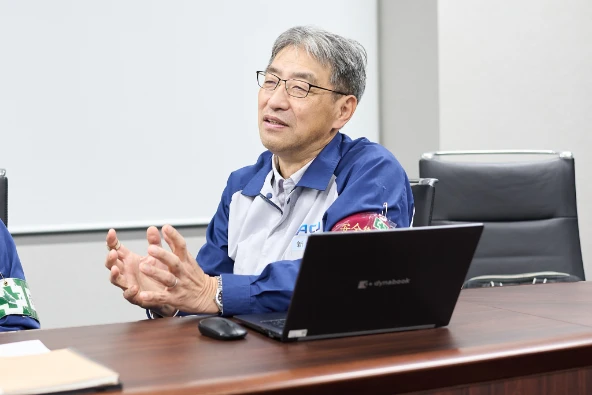
![Yoichiro BEKKI: Fundamental Research Department, Research & Development Center, Marketing & Technology Division (formerly Vice Director of the Research & Development Division [now the Research & Development Center ])](/english/aluminum_future/stories/assets/img/aluminum_stories_story03_img01.webp)
Fundamental Research Department, Research & Development Center, Marketing & Technology Division (formerly Vice Director of the Research & Development Division [now the Research & Development Center])
Yoichiro BEKKI

Ph.D. (Engineering), Vice-Director, Mobility Technology Center, Marketing & Technology Division
Akio NIIKURA

General Manager, Flat Rolled Foundry and Forged Products Development Department, Research & Development Center, Marketing & Technology Division
Mineo ASANO

Assistant Section Chief, Department for Automotive Materials Sales, Flat Rolled Products Division
Motonobu HACHINO
- Note: Department names and titles are those as of February 2026 as well as the highest positions held in the past.
On the history of automobile weight reduction by UACJ and the evolution of aluminum materials
Question: Please tell us about the background to the adoption of aluminum in automotive panel materials.
BekkiThe initial trigger that led to the full-scale adoption of aluminum in automobiles was sports cars. At that time, the primary objective was not CO₂ reduction or environmental issues as seen today; instead, weight reduction was demanded to enhance driving performance.
Particularly in front-engine vehicles, there was a strong requirement to lighten the front end of the vehicle in order to improve handling performance, and this prompted the shift from steel hood (bonnet) panels to aluminum ones. Back then, enhancements in dynamic performance and responsiveness were regarded as overwhelmingly important above all else.
Q: Was adopting aluminum considered innovative at that time?
BekkiLightweight materials themselves had been under consideration for some time, but aluminum began to be used in earnest as automotive panel material around 1985. In terms of actually placing it on mass-production lines, I believe those efforts at the time represented a major step forward.
Q: I believe there were technical difficulties as well, but what kinds of ingenuity were employed?
BekkiAt that time, steel sheets had become the "standard" material for automobile manufacturers because it was extremely easy to form. Introducing aluminum meant that the absolute prerequisite was the ability to process it in the same way as steel sheet.
Therefore, we initially based our efforts on 5000-series aluminum alloy (hereinafter referred to as "5000-series alloy"), which is one of the most workable aluminum types, and repeatedly refined the alloy design and manufacturing conditions to produce a material resistant to cracking and capable of uniform rolling. Through extensive trial & error, we succeeded in realizing aluminum sheet material that is easy to handle and close in behavior to a steel sheet.,
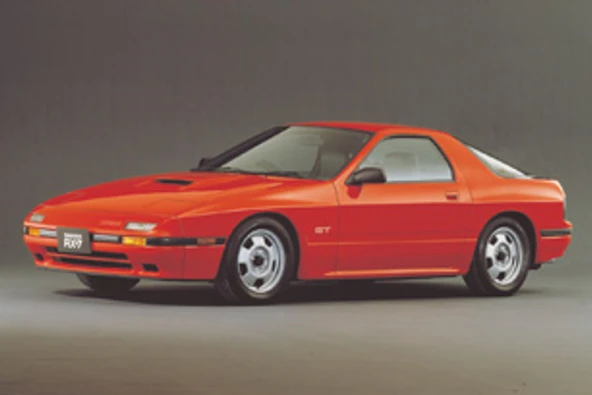
Courtesy of Mazda Motor Corporation
- We have received consent for use from Mazda Motor Corporation; therefore, any reproduction or exclusive use by others is strictly prohibited.
Q: You mentioned that, at the time, development focused first on improving 5000-series aluminum alloy to achieve "formability close to that of steel." How did material development evolve from that point onward?
BekkiWhile 5000-series alloys offered excellent workability, they had the drawback that strength tended to decrease during the painting process (bake coating). Therefore, we developed 6000-series aluminum alloy (hereinafter referred to as "6000-series alloy"), in which strength increases through baking. This enabled us to secure the required strength in thinner panel materials and thereby broaden the extent of weight reduction possible. The advantages of aluminum also permeated among automobile manufacturers, aligning with the trend toward "materials that could lighten car bodies as much as possible," and the use of 6000-series aluminum alloys gradually became mainstream.
Q: Within that context, what role has UACJ played?
NiikuraA symbolic event of the 1990s was the all-aluminum body of the first-generation NSX, developed by Honda Motor Co., Ltd. It was the world's first mass-produced vehicle to feature an entirely aluminum body, and much of the material supply for it was borne by the predecessors of today's UACJ: Furukawa Electric Co., Ltd. (later the former Furukawa-Sky), the former Sumitomo Light Metal Industries, and the former Sky Aluminum. Our company's major involvement during the period when development toward mounting aluminum alloys on actual vehicles advanced in earnest has become an important experience that continues to connect to and influence our subsequent development of automotive materials.
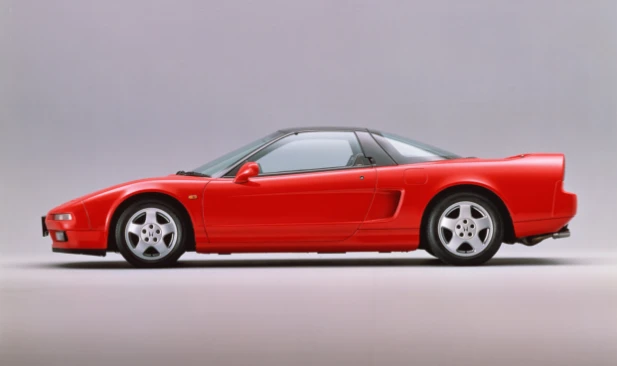
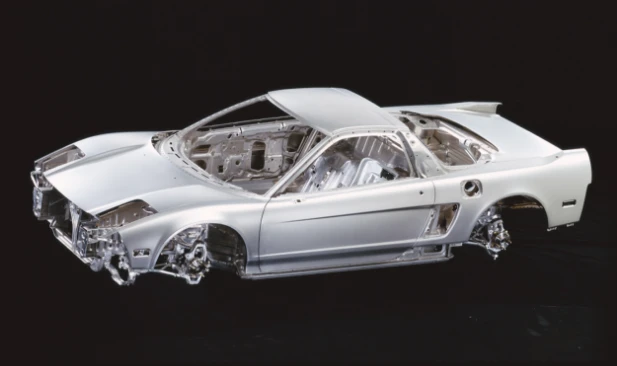
NSX (Japan’s first vehicle with an all-aluminum-body)*
Courtesy of Honda Motor Co., Ltd.
- We have received consent for use from Honda Motor Co., Ltd.; therefore, any reproduction or exclusive use by others is strictly prohibited.
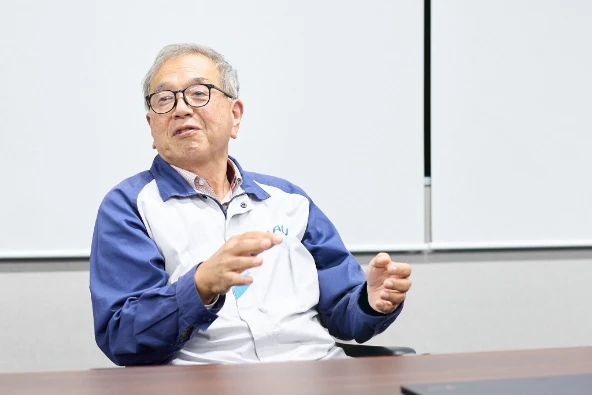
BekkiIn Japan, steel sheets and aluminum sheets needed to be processed on the same painting line, which made the development of 6000-series alloys—capable of reliably increasing strength even within limited time—indispensable. We confronted numerous challenges, including improving formability and clarifying the mechanism behind strength enhancement during bake coating, and by resolving these, we propelled domestic research & development in this field forward dramatically.
In particular, it became clear that controlling the internal structure of aluminum—specifically, very small atomic clusters—was crucial for increasing strength during baking, and establishing the technology to control this structure within mass-production lines represented a major accomplishment. Through these efforts, the high-performance 6000-series alloy technology cultivated in Japan is now utilized worldwide in current automotive development.
Q: With the strengthening of environmental regulations in the 2000s, how did the demand for automobile weight reduction evolve?
BekkiEntering the 2000s, exhaust gas regulations and fuel economy regulations strengthened globally, making "reducing CO₂ emissions through vehicle weight reduction" a major theme. Whereas aluminum adoption had previously advanced mainly in sports cars, weight reduction came to be demanded for general vehicle models as well, and I feel that the examination of aluminum materials became active once again.
On the other hand, because aluminum emits large amounts of CO₂ during the production of virgin metal, there was also discussion questioning "Is it really environmentally beneficial?" This is where the concept of LCA (Life Cycle Assessment)—evaluating environmental impact across material production, use, and vehicle scrapping—gained importance. As the LCA perspective proliferated, the understanding grew that increasing the use of recycled materials is indispensable to enhancing aluminum’s environmental value.
AsanoThe 1997 Kyoto Protocol served as the catalyst for a sharp rise in demand for better fuel efficiency, centered on hybrid vehicles, and this prompted a renewed expansion in the adoption of aluminum for automotive panel materials aimed at weight reduction.
A major barrier to broader dissemination was "cost." Consequently, there arose a strong need for initiatives that reviewed and optimized manufacturing processes and conditions to maintain performance while restraining price increases.
NiikuraIn the United States, CAFE regulations—which mandate that automakers achieve average fuel economy standards—were strengthened, heightening the demand for vehicle body weight reduction. A symbolic case of this was the aluminumization of the Ford Motor Company F-150, launched in North America in 2015. By achieving a substantial weight reduction of approximately 230 kg, it created a powerful surge in momentum for proactively adopting aluminum, particularly in North America. This wave also reached Japan, where aluminumization movements re-accelerated, especially in luxury vehicles and SUVs.
At our company, we have advanced initiatives to meet these weight reduction needs, such as jointly developing panel materials for Toyota Motor Corporation's Land Cruiser*1.
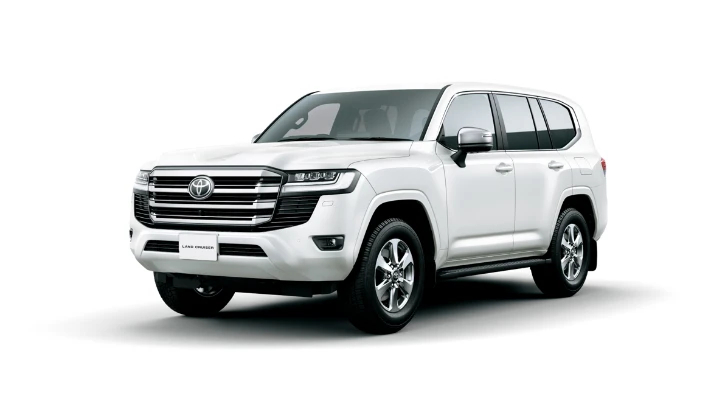
Courtesy of Toyota Motor Corporation
- We have received consent for use from Toyota Motor Corporation; therefore, any reproduction or exclusive use by others is strictly prohibited.
*1 Press release (2021-08-05) detailing the adoption of UACJ's aluminum sheet materials in the body panels of Toyota Motor Corporation's newest Land Cruiser (Japanese only)
Toward the mass production of 6000-series aluminum alloys: The pivotal role of Fukui Works
Q: Amid rising demand for aluminum panel materials, how was the mass production system developed and established over time?
Asano When demand for 6000-series alloy panel materials began to reach several thousand tons or more, the first necessity was a dedicated heat treatment line.
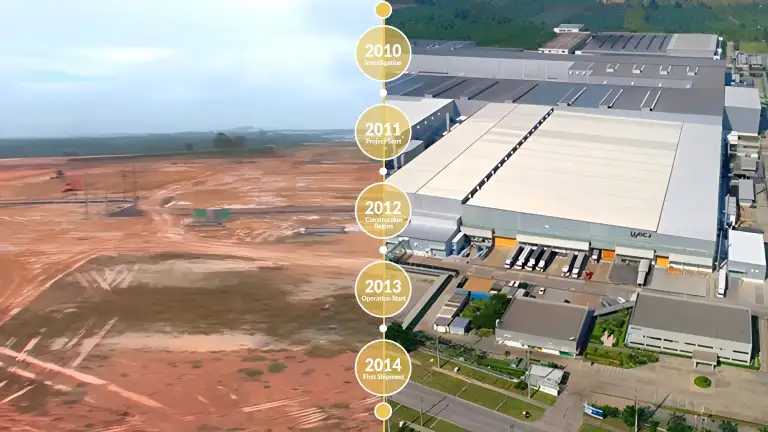
To impart the characteristic of increased strength after bake coating, 6000-series automotive panel materials require the specialized CALP (Continuous Annealing Line with Pre-treatment) process, which enables continuous rapid heating followed by rapid quenching. However, introducing CALP demanded substantial capital investment and required vast installation space. We advanced planning to the design stage at Nagoya Works, but as the concept became more concrete, it became evident that the site at Nagoya Works could not accommodate it. This led us to consider Fukui Works as a candidate. At that time, Fukui Works focused primarily on producing beverage can stock and had almost no experience in mass-producing automotive materials. On the other hand, it offered ample space for new equipment, and we reached the conclusion that a dedicated line could be constructed there.
Q: That said, merely installing the equipment alone does not enable mass production, does it?
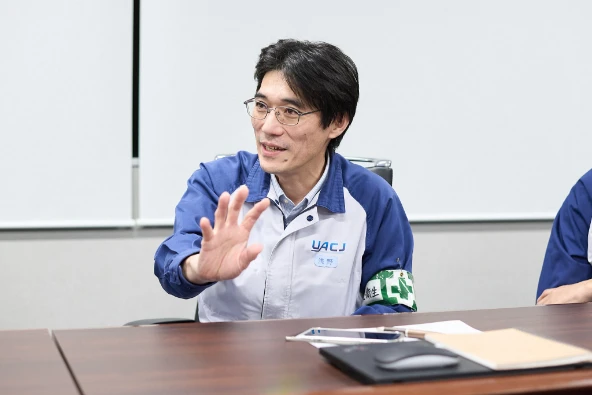
AsanoAs you pointed out, mass production is impossible with equipment installation alone. At that time, although the equipment was nearly complete, there was no one on site capable of process design for automotive materials. Therefore, staff members who had handled process design for automotive materials at Nagoya Works and Fukaya Works transferred to Fukui Works, where they took responsibility for establishing the process design and launching quality assurance. I myself transferred to Fukui Works in the spring of 2020 and collaborated with various departments to jointly build up the mass production conditions.
NiikuraAt that time, Fukaya Works was in the midst of transitioning its production system to focus primarily on thick aluminum plates, so personnel experienced in thin sheet and panel materials were reassigned to Nagoya Works and Fukui Works. By doing so, we consolidated at Fukui Works the technologies accumulated up to that point and constructed a mass production system for automotive panel materials entirely from scratch.
AsanoThe image is that we built the mass production system for automotive materials by fitting the expertise from Nagoya Works and Fukaya Works into the mass production foundation at Fukui Works. It was precisely a mass production system constructed by concentrating internal knowledge and building it up on the ground at the site.
Q: With the new line now in operation, what changes have taken place?
AsanoWe began mass production in December 2020, but when I transferred to Fukui Works in April–May 2020, the mass production framework was not yet sufficiently in place. Even though the equipment was nearly complete, we had not yet established a "mass production-oriented framework"—such as specific manufacturing conditions or quality assurance methods.
Therefore, members who had been conducting process design at Nagoya Works and Fukaya Works gathered at Fukui Works, and we achieved startup in one intensive push over about six months. By bringing in members with diverse experiences, we were able to pool each person's ideas on process design and quality assurance and shape them into the optimal configuration.
At the time, I was in the field almost every day, making repeated adjustments. Far more decisions were made on-site, looking directly at the actual items, than through desk-based planning.
Through this steady accumulation of efforts, Fukui Works has become the central hub for automotive panel materials within the UACJ Group. Today, panel material production is centered at Fukui Works, with a portion of small-volume varieties produced at Nagoya Works.
Overcoming the barrier to aluminumization: Breakthrough in door-forming technology
Q: With the mass production system now established, what new breadth and opportunities emerged in materials development and in joint consideration efforts with automobile manufacturers?
HachinoOnce we achieved the stable supply of aluminum panel materials, the next key theme became "to what extent can we expand aluminumization—and which parts can we apply it to?" Doors proved especially challenging. Door inner panels demand deep drawing and complex shapes—a part that is already difficult to form even with steel sheets—and with aluminum, cracking and wrinkling occur even more easily. While the design side wanted to employ aluminum for weight reduction, production judged that "this shape cannot be made with aluminum, " and adoption did not proceed. Such circumstances persisted.
Therefore, we, as a materials manufacturer, could no longer simply supply the material; we needed to go further and propose how to form it so that aluminum could be mass-produced, including suggesting the forming process itself. I took on the development of "one-piece forming technology" for aluminum door inner panels. Instead of performing drawing in a single operation, we divide the part into two sections and carry out drawing twice, thereby suppressing cracking and wrinkling. In addition to in-house research, I was dispatched to an automobile manufacturer, where I collaborated directly with the mold fabrication department on demonstration trials and the development of mass-production applications.
This initiative bore fruit, culminating in the mass production of the world's first door inner panel achieved through one-piece forming using 6000-series alloy—for the Lexus LS. Whereas 5000-series alloy—with its excellent formability—had been the standard until then, realizing this with 6000-series alloy marked a major breakthrough by successfully combining high strength with weight reduction. Automobile manufacturers evaluated it highly, and I vividly recall receiving a project award in the technology category.
These successes greatly advanced our relationships with automobile manufacturers. By proposing not only the aluminum material itself but also the know-how for skillfully utilizing it—including forming technology—the application of aluminum to more-complex parts became a realistic option, and the possibilities for aluminumization expanded dramatically in one surge.

Toward these materials becoming the "preferred choice": The emergence of low-CO₂ recycled materials and the "U-Alight" brand
Q: UACJ's low-CO₂ recycled materials were adopted for Toyota Motor Corporation's MIRAI*2, released in 2020. What significance did this adoption hold at the time?
*2 Press release (2021-02-04) detailing the development of low-CO₂ recycled aluminum material as adopted for Toyota Motor Corporation's MIRAI body panels(Japanese only)
For more information, see Toyota Technical Review (TTR), Vol. 66, pp. 94–97 (PDF).
AsanoAround 2020 marked the time when the automotive industry as a whole began to place strong emphasis on carbon neutrality (CN) and the circular economy (CE). We at UACJ took the lead on this trend and advanced the development of automotive aluminum sheet materials with significantly higher recycling rates.
Precisely during that period, development of the new MIRAI commenced, and the question of "what materials to use " for this environmentally responsive vehicle came under intense scrutiny. When we proposed our low-CO₂ recycled materials, Toyota Motor Corporation responded with the request that "we would like to include in the MIRAI catalogue the fact that this material has been adopted." This led to formal consideration and evaluation. Even in the sense that we received such strong expectations from them, I believe this represented a major milestone.

Courtesy of Toyota Motor Corporation
- We have received consent for use from Toyota Motor Corporation; therefore, any reproduction or exclusive use by others is strictly prohibited.
NiikuraThe MIRAI serves as a symbol of Toyota Motor Corporation's environmental technology. The adoption of our low-CO₂ recycled materials therefore carried significance far beyond mere materials selection. As automobile manufacturers increasingly place environmental response at the forefront, our company's initiative—"contributing to society through the advancement of recycling"—took concrete form, and we gained a strong sense of having demonstrated one step ahead.
Q: What strategic objectives lay behind the launch of the "U-ALight" automotive sheet materials brand in 2021?
AsanoOriginally at UACJ, we centered our approach on a "one-to-one" method, customizing materials for each individual customer. We jointly considered challenges together with automobile manufacturers and developed materials dedicated exclusively to that manufacturer—accumulating such work to steadily refine our technical capabilities.
However, circumstances differ somewhat on the global stage. In Europe and North America, aluminum manufacturers typically make their materials into a series under a few distinct "brands" and promote them with the approach of "please select from these according to your application." Branding makes the material's characteristics easy to convey and proves extremely rational from both sales and development perspectives.
NiikuraSo, a proposal emerged from our sales team: "Wouldn’t it be easier for customers to understand if UACJ also branded and organized our materials?" We invited ideas from younger employees as well, and from among them, "U-ALight" was selected.
It combines the "U" from UACJ, the "AL" from aluminum, and "Light" from lightness—layering them to create a name that instantly conveys UACJ’s identity and the core value of aluminum in a single word.
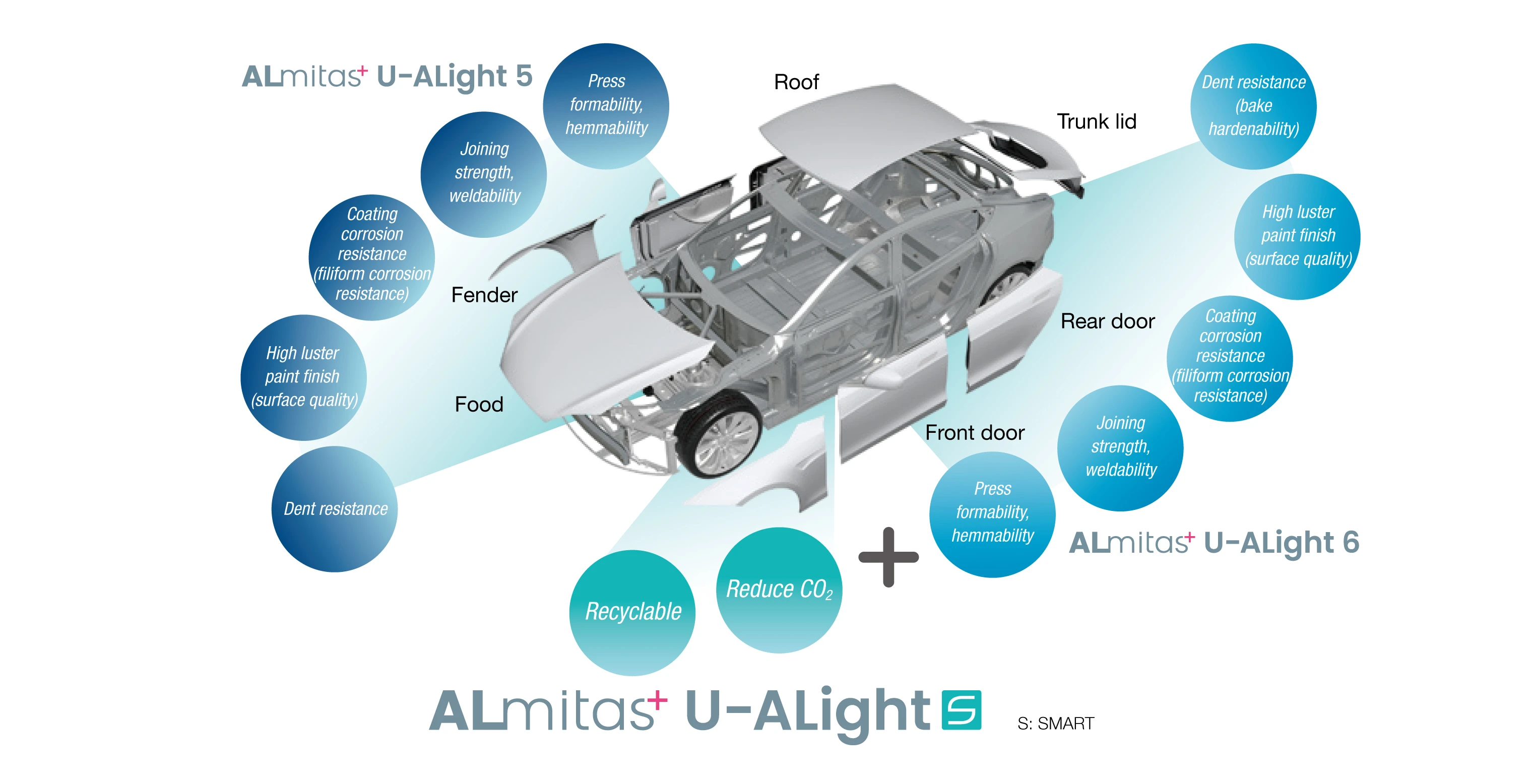
AsanoWe did not hurriedly develop new materials for the sake of the brand. Instead, we organized the lineup that already existed into a "selectable form" and assigned names to the materials. Thanks to this, customers can now grasp at a glance "what kind of characteristics this material possesses."
Rather than continuing to develop materials tailored to each individual customer as in the past, we became able to clearly present to the world that "UACJ has this kind of lineup"—and I believe that is the greatest significance of U-ALight.
How to widen the recycling loop: The "export" barrier facing automotive aluminum materials and the possibilities beyond
Q: What kind of progression or developments led UACJ to begin its initiatives in closed-loop recycling?
AsanoAluminum, as is well known in the world of beverage cans, is a material that pairs extremely well with recycling. However, when it comes to automotive body panels, the circumstances are somewhat more complex. Because the purity and composition of the alloy greatly influence the material's properties, mixing it with other materials creates the challenge of being unable to maintain quality.
That is why we first focused on the approach of directly collecting the press scrap generated at our customers' factories. Since the scrap remaining after pressing allows us to know completely which vehicle model and which aluminum composition it comes from, it can be remelted and reused as the exact same material. This became the first step in closed-loop recycling.
NiikuraAs background, from around 2020, the adoption of aluminum as a lightweight material for automobiles entered a period of sluggish growth. In that context, recyclability was once more highlighted as a "new value for aluminum." Aluminum maintains its quality easily even when melted, and it enables a significant reduction in CO₂ emissions during manufacturing. Driven by the desire to communicate this strength more actively, we began proactively proposing recycled materials.
BekkiBeverage cans use almost the same alloy worldwide, so recycling them in the market presents almost no quality issues. In contrast, the aluminum used in automobiles varies in composition and properties from one manufacturer to another, which makes reuse extremely difficult once materials are mixed. At present, the realistic solution is closed-loop recycling, in which each manufacturer establishes its own "closed loop."
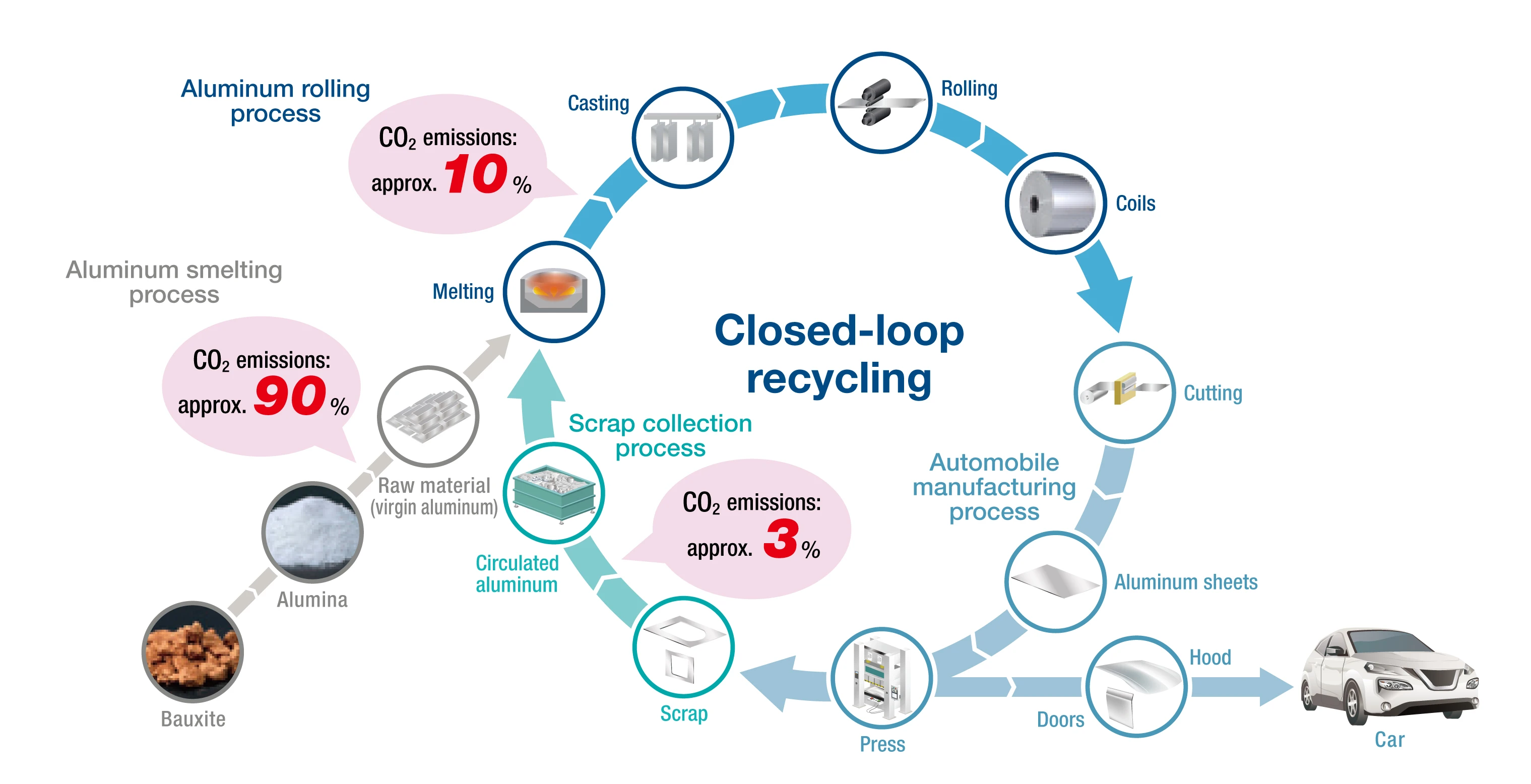
AsanoIn recent years, efforts have advanced to extend this mechanism to other manufacturers as well—collecting as much press scrap as possible from automakers and returning it once more as material. We at UACJ consider supporting such a cycle of circulation to be one of our important roles.
Q: Even for automotive aluminum panels, there is the challenge of wanting to expand a "domestic circulating recycling loop" similar to that for beverage cans. What factors are currently making this realization difficult?
AsanoThe single greatest obstacle is the export of used vehicles. Automobiles produced in Japan that incorporate a large amount of aluminum tend to be exported overseas—including as used cars. Consequently, the number of vehicles that can be recovered as scrap within Japan is extremely limited, leaving the overall volume of available scrap fundamentally insufficient. Even when attempting to establish a circulating recycling system, the harsh reality remains that the materials "do not return."
Furthermore, automobiles have a long lifecycle exceeding 10 years, which differs fundamentally in structure from products like beverage cans that circulate on a scale of just a few months. This too represents an essential factor that makes automotive recycling inherently challenging.
Q: Then, as an aluminum manufacturer, is there any scope for taking proactive approaches to address this challenge?
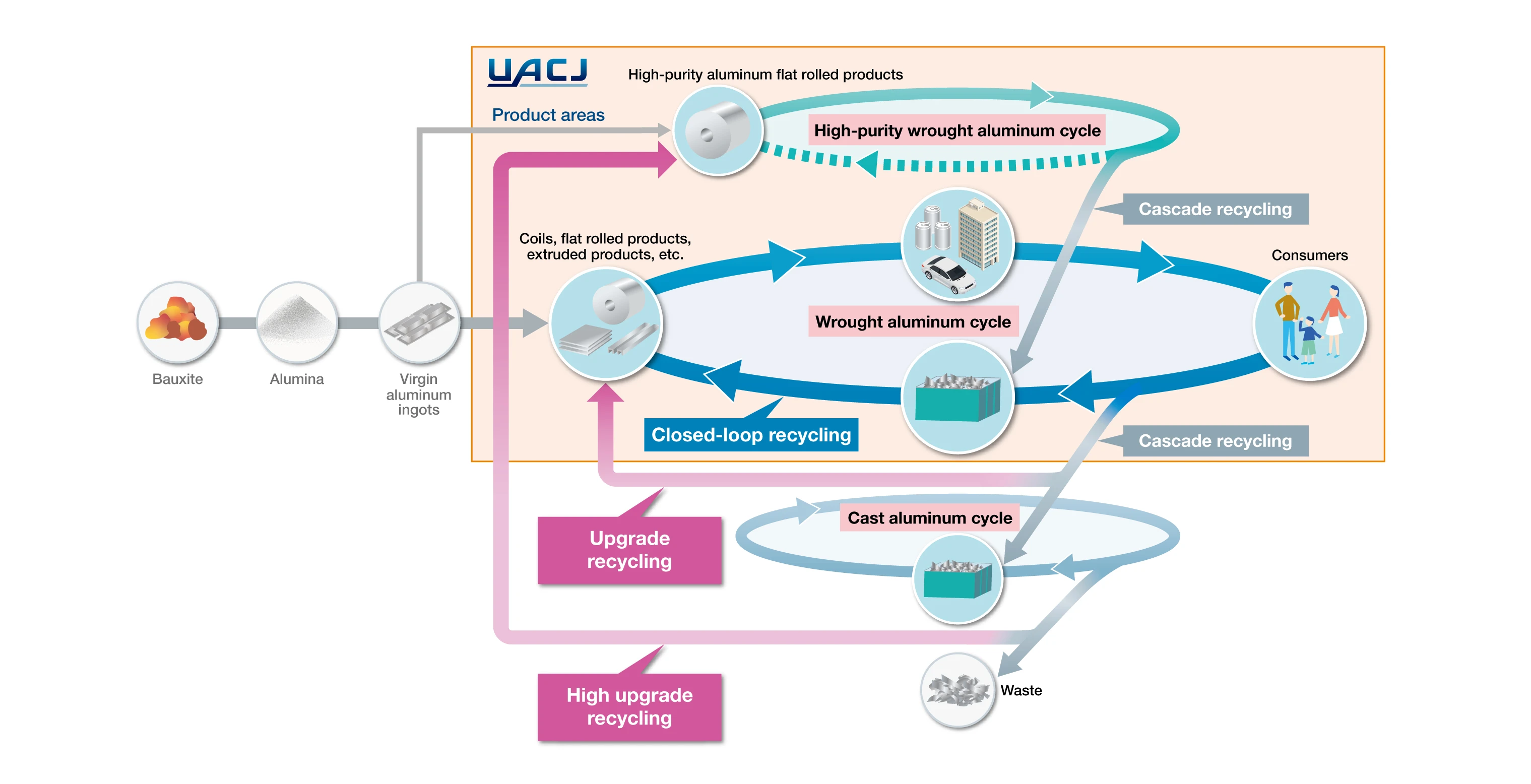
BekkiActually, a key hint lies in the realm of cast aluminum products. The alloys used for aluminum die casting have undergone significant standardization and feature high tolerance for impurities, making them inherently capable of accepting a broad range of scrap inputs. The presence of such aluminum casting alloys is one major reason why aluminum enjoys its reputation as a highly recyclable material.
In contrast, the aluminum alloys employed for automotive body panels require extremely strict purity control to preserve strength and formability; even minor impurities can significantly affect performance. For this reason, at present there is no choice but to circulate them in a closed loop.
Looking ahead, however, the development of more-versatile general-purpose alloys for panel materials—capable of accommodating a wider variety of scrap—holds the potential to create a large-scale recycling loop comparable to that of beverage cans. In addition, we are advancing research into recycling technologies such as upgrading and high-upgrading. These aim to restore high-impurity aluminum scrap from castings and similar applications to a low-impurity state while also realizing manufacturing processes that maintain performance even in the presence of some impurities. While this remains close to a visionary goal for now, it is firmly within our scope as a theme for the future.
Q: What kind of future is UACJ aiming to shape for its automotive panel materials business going forward?
BekkiIn the automotive sector, the gradual shift from steel sheets to aluminum sheets has steadily advanced, and aluminum has now established itself as one of the primary materials.
Even as the transition to electric vehicles and evolving vehicle architectures continues, the inherent value of aluminum—its lightness combined with strength—should only increase further. If the market demands center on "low CO₂" and "high recyclability," we intend to keep refining and advancing new technologies with those attributes at the core.
In the same way as aluminum beverage cans, we envision a future in which aluminum is able to develop and thrive as an indispensable "main material" essential to society.
NiikuraAutomobiles incorporate not only aluminum but also materials such as steel and resin. Among these, there are certainly capabilities unique to aluminum—for instance, weight reduction, recyclability, and the performance required for future electrification.
By advancing and enhancing these strengths further, we can make meaningful contributions to society, and aluminum adoption volumes should naturally rise as a result. We are determined to broaden aluminum's potential even more by strengthening our three core pillars: superior technical capabilities, cost reduction, and recycling excellence.
HachinoLooking ahead, mobility will diversify far beyond automobiles to encompass aerial transportation, small commuter vehicles, and more. The perennial demand to make moving objects lighter persists in every era, and the foremost metal that meets this need remains aluminum.
Of course, new applications always give rise to fresh challenges. We at UACJ see our role as partnering closely with customers to overcome these hurdles and shape aluminum into forms that are truly practical and user-friendly.
Our aspiration is to become the brand that customers choose because they say, "We want UACJ aluminum precisely because it is UACJ aluminum." To that end, we intend to keep pushing forward with challenges across both technological development and on-site operations.
AsanoThe ideal future is one where aluminum is used as naturally and routinely in automobiles as it is in beverage cans and aluminum foil.
When that future arrives, aluminum will truly have become a "material that underpins society," and the "lighter world" that we at UACJ aim to create will have been realized.