


Conversation between the New and Former Chairpersons of the Nomination and Remuneration Advisory Committee
 Share
ShareMaking Corporate Governance more Effective with a Dynamic Board System Built on Mutual Trust

Photo (left)
Takahiro Ikeda
Independent Outside Director,
member and former chair of the Nomination
and Remuneration Advisory Committee
Former Chair of the Committee
Photo (right)
Ryoko Nagata
Independent Outside Director
chair of the Nomination and Remuneration
Advisory Committee
After establishing its Nomination and Remuneration Advisory Committee in 2017, UACJ has made progress in corporate governance reforms, backed by the committee’s deliberations. The current and former chairs of the committee met to discuss the features of the Company’s succession planning, peer evaluation system for outside directors, and how the committee will be run in the future.
Q. In June 2024, UACJ changed its president for the first time in six years. What were the unique aspects of the succession plan?
Ikeda:
UACJ was created through a merger, and it has a mixture of traditions and cultures of the original companies. To nominate a president of a company that has been merged, the highest levels of fairness, objectivity, and transparency are required to gain credibility among all kinds of stakeholders, especially employees, shareholders, and investors. We were keenly aware of this when formulating and executing the succession plan.
Nagata:
We outside directors play a big role in ensuring fairness and objectivity. The Company’s Nomination and Remuneration Advisory Committee is comprised of two internal directors and five external directors, so even if the sitting president prefers a certain successor, it must be approved by a majority of the outside directors. From an external perspective, I think this is an excellent arrangement for placing a strong check on the process, but it also means that outside directors have a big responsibility. My input and even a single vote in the committee can affect the future course of the Company, so in each round of deliberations, I feel the pressure and come fully prepared.
Ikeda:
After announcing our succession plan, we have been building a pool of management talent for the future. When selecting candidates, I place importance on whether they have experience as managers in intensely competitive industries, have worked overseas, and have been given tough assignments in those roles. In other words, I look at whether they have handled really challenging work and overcome obstacles. Since UACJ was established in 2013, it has faced dramatic changes in its operating environment, such as the pandemic and a trade war between China and the United States. It has never operated in normal times, so to speak, so it needs leaders who can spearhead changes in times of crises.
Nagata:
Among the candidates for president, the committee ultimately nominated Shinji Tanaka because he had demonstrated leadership in various ways, such as starting up a subsidiary in Thailand and executing structural reforms.
Ikeda:
The committee also has an important role in evaluating the performance of the new executive team. Amid an increasingly uncertain operating environment, we need to assess whether the mid-term management plan is making real progress, targets are achieved by the plan’s final year, and management is contributing to realizing the Group’s long-term roadmap, UACJ Vision 2030. We will evaluate President Tanaka every year and point out specific issues that need to be addressed.
Q. Are there any challenges ahead for the Company’s succession planning?
Ikeda:
I think the plan will be even more effective if we start creating a pool of capable candidates at an earlier stage and then narrow down the leading candidates four or five years before changing the president. That will provide enough time to systematically assign the candidates to roles that give them experience in managing businesses overseas or corporate planning.
Nagata:
When pooling talent, I feel there is some room for improvement. We are choosing candidates for the future president, so it is natural to confirm that they meet certain requirements across all categories of capabilities. If candidates must meet every one of these requirements, however, we might overlook people who have exceptional capabilities in specialized areas. Succession planning is a process of grooming the next generation of leaders—not only the president—who will guide the Company’s management, so I think we should ensure diversity in the talent pool while considering what kind of management team we want to form in the future.
Ikeda:
As you say, a broad pool of talent is very important for ensuring diversity in management in the years ahead. Following its establishment, the Company appointed three successive presidents with technical backgrounds. That was certainly not intentional, but if we keep appointing presidents with technical backgrounds, management could become too focused on technical matters in the future. Therefore, I think we should choose capable candidates from among people who have experience in sales, finance, and planning, and provide career development support for future managers.
Nagata:
Besides skills and backgrounds, I think gender and generational barriers still remain as we try to make management more diverse. To break down these barriers, it will be important to proactively include younger people of both genders in future talent pools.

Q. What is the process of the succession plan for outside directors and members of the Audit and Supervisory Board?
Ikeda:
Based on the succession plan for outside directors and members of the Audit and Supervisory Board, we draw up a long list of candidates, screen their documents, and hold preliminary interviews to narrow down the number. At the final stage, the committee holds interviews with the candidates and makes a decision on which ones to nominate. They are officially appointed after being approved by the Board of Directors and general meeting of shareholders.
Nagata:
The labor market for outside directors and auditors is very competitive now, and exceptional people tend to receive a flood of offers from many companies. That makes it difficult when selecting candidates who suit the Company’s corporate culture and have the necessary specializations and experience, because there are only a limited number of people we can target, and if we take too much time to identify the candidates, other companies might get them first.
Ikeda:
To ensure diversity in the Board of Directors, we also need to consider women, foreign nationals, and people with expertise in fields that other board members do not possess when making selections. In practice, however, the number of qualified people becomes even more limited and competition for talent is more intense when diversity is added to the equation.
Nagata:
That’s right. When identifying women with corporate executive experience, for example, we can find many with backgrounds in human resources and public relations, but there are actually very few women with executive experience in other fields, especially technology. In the years ahead, I think the Company’s Board of Directors will increasingly need members who are well-versed in AI and digital technologies, but business savvy people who specialize in these technologies are in high demand, regardless of gender, so it is not easy to attract them.
Ikeda:
To recruit such exceptional talent, the Company will need to consider suitable and competitive levels of remuneration for outside directors and members of the Audit and Supervisory Board.
Q. The peer evaluation system for outside directors is a unique feature of UACJ’s corporate governance. What is the purpose of this system?
Ikeda:
We outside directors have a role in supervising the Company’s management, but for this supervision to function properly, there needs to be a system for verifying whether the outside directors are adequately performing the roles and duties expected of them. The Company has been evaluating the effectiveness of the Board of Directors every year since fiscal 2016, and in fiscal 2020, it initiated a thirdparty evaluation to be conducted every three years. The peer evaluation system for outside directors started in fiscal 2023. By combining the effectiveness evaluation and the peer evaluation, the Company can evaluate directors more objectively and from a wider range of perspectives.
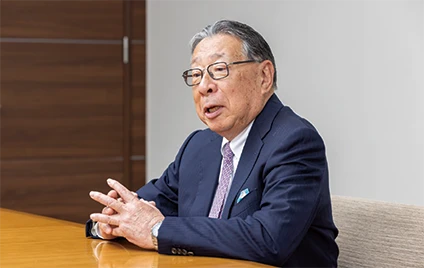
Nagata:
At a time when business conditions are changing dramatically, the qualities and capabilities of outside directors are also sure to change. Even if outside directors were fully qualified at the time they were nominated, a system is needed for periodically confirming that they can contribute in the future as the Company goes through different stages.
Ikeda:
The term of a director is one year, and their nominations must be approved at the general meeting of shareholders each year. It is difficult for newly appointed outside directors to fully understand the Group’s businesses over a single year, so the committee expects them to serve for several years. The Committee deliberates on whether each outside director can sufficiently fulfill his or her duties and serve another term. The results of the annual peer evaluations are reported to the committee and used as a resource for deciding on the reappointments of the outside directors.
Nagata:
My first experience with the peer evaluations came about half a year after I was appointed. I was surprised by the depth of evaluations, but receiving comments from the other outside directors was a novel experience for me and gave me many insights. While people may be evaluated quantitatively, the higher up they are in an organization, the fewer opportunities they have to receive qualitative feedback, so I think this system is useful for self-reflection.
Ikeda:
Each time we are evaluated, I renew my focus because many comments are unsparing, but I feel this helps to keep us on our toes. The fact that we can comment so openly is proof of the trust we have built up with each other.
Nagata:
At UACJ, the Board of Directors is guaranteed as a safe space, which allows all members to speak freely, regardless of whether they are internal or outside directors. Our contributions are rated in the peer evaluations, so if scores are higher in the second year than in the first, we can feel gratified about making a genuine contribution.
Ikeda:
Three years have passed since the peer evaluation system was initiated. The system is important for ensuring the effectiveness of the Company’s corporate governance, so I think it should continue to be developed in the years ahead.
Q. The Company’s officer remuneration system has been continually revised since 2018. What is the committee’s approach to this system?
Ikeda:
In my view, the remuneration system for internal officers increases business success rates, so it should be strategically designed. For example, it is important for the remuneration system to motivate officers to take on new challenges. The labor market has recently become more fluid, so recruiting the specialists we need for new business entry from outside the Group will increase. Unless we can offer such talent attractive remuneration levels and programs, the Group will not be able to grow. For these reasons, in 2025, we raised the base salary to a level appropriate for the Company’s size, and increased performance-linked remuneration as a percentage of total remuneration by boosting both the shortterm portion and the medium- to long-term stock-based portion relative to the base salary.
Nagata:
In the future, I think the scale of performance-linked remuneration should be even larger. If officers receive a large salary every month regardless of performance, they may lose their motivation to take risks and take on challenges at a time when changes in business conditions are more extreme. The system must be designed to offer incentives, including both types of performance-linked remuneration, and not become a vested right.
Ikeda:
Unlike employees, results are everything for officers, so it is important to fairly evaluate their performance and properly compensate them. In our industry, however, results of measures being taken now might not appear by the following year. For that reason, besides rewarding shortterm performance, it is essential to offer medium- and longterm incentives like stock-based remuneration, which reflects improvements in the Company’s performance and market capitalization. Based on this perspective, while incorporating data from survey firms and emphasizing objectivity and transparency, the committee has been working to optimize the officer remuneration system so that it contributes to raising the Company’s market capitalization.
Q. Finally, Ms. Nagata, what do you aspire to do as the new chair, and as a former committee chair, Mr. Ikeda, what are your hopes and expectations for the new chair?
Ikeda:
Each member of the Nomination and Remuneration Advisory Committee has a wealth of knowledge and experience, and while thinking of ways to draw on that, I had put all of my energy into chairing the committee. I would like you to unify the committee using your own approach.
Nagata:
Over the two years when you served as chair, I closely observed your actions as a member of the committee. While I cannot chair it in the same way that you did, in addition to facilitation, I will do whatever I can to contribute in my own way.
Ikeda:
Looking ahead, I want the committee to discuss how to raise public awareness of the Company’s businesses, which has been a challenge. We have actively advertised in the past, including through television commercials, but we are still at the stage of trying to increase brand recognition. Furthermore, as a result of serious deliberations on how to improve corporate governance, which were led by the Nomination and Remuneration Advisory Committee, the Company’s corporate governance system has several unique features, such as the peer evaluation system for outside directors that we talked about earlier. We need to make people involved in capital markets more aware of this.
Nagata:
Corporate governance is largely associated with compliance, but practicing proactive governance is important for raising the Company’s value over the medium and long terms. For example, I think we should discuss the Company’s future PR and branding strategies with promising managers from the next-generation management pool, and appoint those who are highly ambitious and have fresh and innovative ideas.
Ikeda:
As you say, seeking out new ideas is important. When discussing things like officer remuneration and employee salaries, we still limit our scope to the nonferrous metals industry. If we remain stuck in outdated conventional paradigms, we will not be able to compete with growing new industries to attract talent.
Nagata:
UACJ will execute strategies for adding more value to aluminum products and apply a business-to-business-toconsumer model to enter new business domains. Therefore, its business structure as well as its corporate culture and organizations will need to evolve. Moreover, it will be important for the Group to broaden its outlook as much as possible, apply new ideas, and take on challenges without staying within the bounds of its three-country manufacturing network because it will develop the aerospace and defense materials business in the future, and building a circular economy is a global project.