

Actions toward Biodiversity
 Share
ShareOur Approach
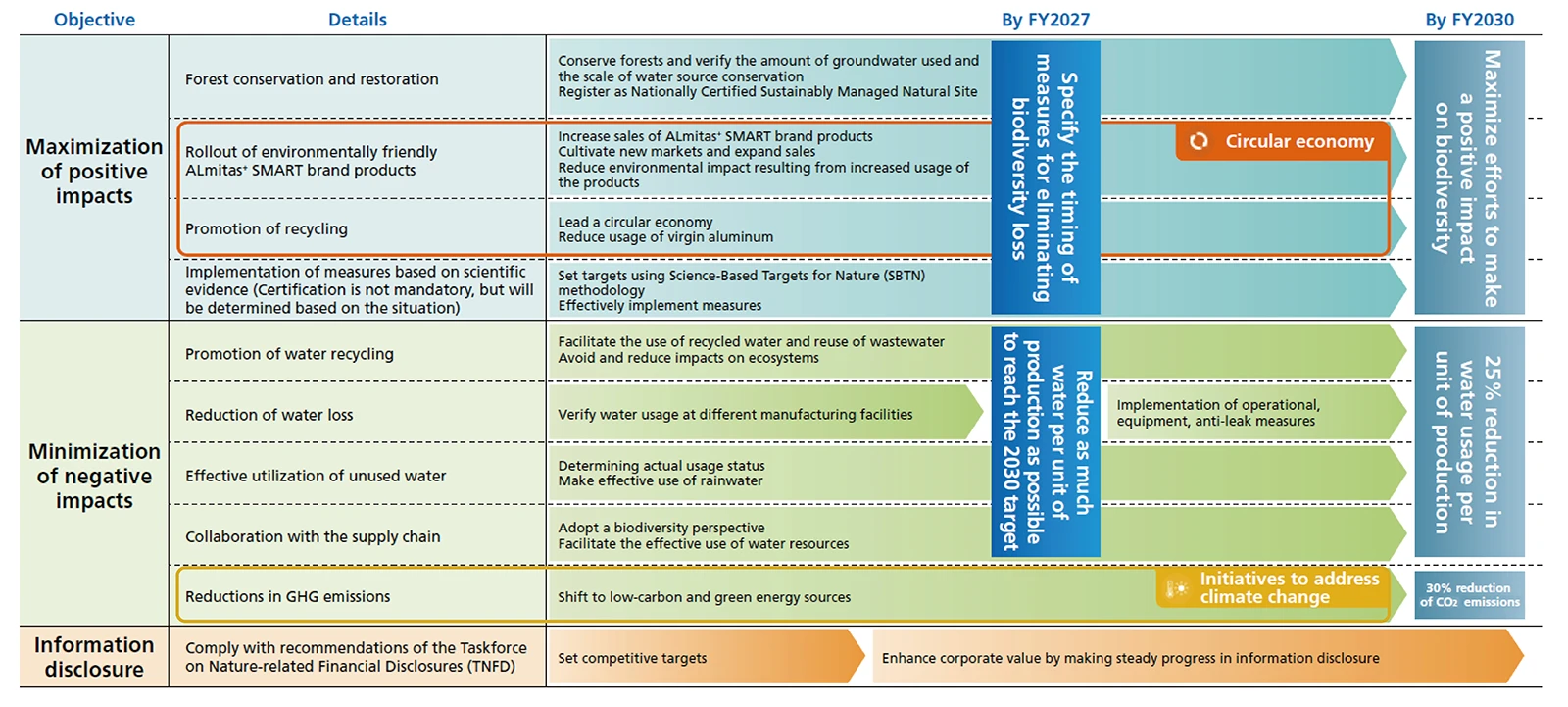
We have designated “supporting environmental health and nature” as a materiality issue in the environmental field. We aim to minimize the impact on nature throughout our supply chain and contribute to Nature Positive (where support for environmental regeneration, creation, and conservation is appropriately balanced with the economy).
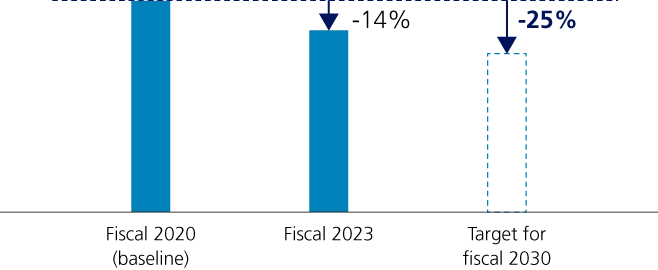
Specifically, we are actively reducing the environmental impact of our business activities through the active use of recycled materials, the recycling of water, and proactive forest conservation activities. We are also promoting the restoration and recovery of forests and water resources. With respect to water recycling in particular, we are working to reduce our environmental impact by positioning the reuse of water used in manufacturing as a routine, everyday task. We have set a target of reducing the amount of water withdrawal per unit of production by 25% from the fiscal 2020 level by fiscal 2030. We are also taking measures to minimize our impact on nature, such as reducing the use of new ingots by promoting aluminum recycling, reducing new mining of bauxite as a raw material, and avoiding deforestation and the endangerment of threatened species.
We are keenly aware that our business activities both benefit and impact the natural environment in various ways. We will continue to work to reduce our environmental impact and contribute to supporting environmental health and nature in ways that only we can.
Roadmap for Environmental Health and Nature
Water Withdrawal Reduction Target
Nature-related Disclosures (TNFD)
In 2023, the Taskforce on Nature-related Financial Disclosures (TNFD) published recommendations, and companies now must address conservation of natural capital and biodiversity while disclosing information. We endorse these recommendations and sequentially disclose information on our efforts in compliance with that framework.
Efficient Water Use
Approximately 70% of the Earth’s surface is covered by water, but only about 0.01% of all of the Earth’s water is freshwater—water that can be easily used by humans.
From a global perspective, these precious freshwater resources are recyclable. However, due to uneven distribution, there are already countries and regions facing serious risks of water shortages. Across the world, approximately 700 million people live with inadequate water supplies, and approximately 1.8 million children die every year because of a lack of clean water.
We strive to use and manage water resources effectively based on our keen awareness of these circumstances. Each of our business locations tracks its water usage by water source. Data on our water usage has been tallied and is included in the material balance information presented in the Business Activities and Environmental Impacts section.
Trends in Water Intake or Discharge
We source water for our operations mainly from groundwater and third parties (including industrial water and tap water), with the vast majority coming from third-party sources. Prior to discharge, the wastewater undergoes neutralization and coagulation-sedimentation treatment, and the water quality of the wastewater is evaluated using specific indicators*1, such as pH, COD, and SS. Only wastewater that is verified as meeting statutory quality levels is discharged.In fiscal 2023, our total water intake volume was 10,600,000 tons, a decrease of 786,000 tons from fiscal 2022. We attribute the reduction to the lower production volume.
- pH is potential of hydrogen, COD is chemical oxygen demand, SS is sedimentable solids.
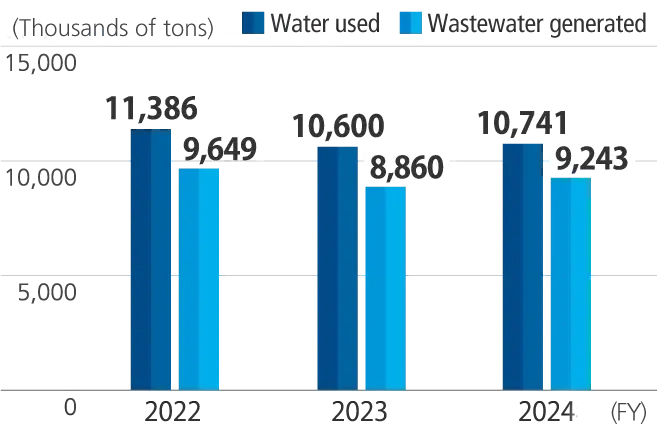
- Note 1 Measurement scope:
(Japan) UACJ(Nagoya, Fukui, Fukaya, Extrusion Nagoya, Oyama, Foundry & Forging), UACJ Aluminum Center(Utsunomiya Color Aluminum), UACJ Extrusion Anjo Corporation, UACJ Extrusion Shiga Corporation, UACJ Extrusion Gunma Corporation, UACJ Foil Corporation(Isesaki, shiga, Nogi)
(Overseas) UACJ (Thailand) Co., Ltd. - Note 2 Companies and sites as of September 30, 2024.
Water Usage by Source (Japan + overseas)
(Thousands of tons)
| Water sources | Fiscal 2024 |
|---|---|
| Groundwater | 3,062 |
| Third-party water withdrawal sources | 7,679 |
| Total | 10,741 |
| Discharge destinations | Fiscal 2024 |
|---|---|
| Fresh surface water (rivers, etc.) | 7,217 |
| Seawater | 273 |
| Third party (sewage water, etc.) | 1,753 |
| Total water discharge | 9,324 |
- Note1 Measurement scope:
(Japan) UACJ(Nagoya, Fukui, Fukaya, Extrusion Nagoya, Oyama, Foundry & Forging), UACJ Aluminum Center(Utsunomiya Color Aluminum), UACJ Extrusion Anjo Corporation, UACJ Extrusion Shiga Corporation, UACJ Extrusion Gunma Corporation, UACJ Foil Corporation(Isesaki, shiga, Nogi)
(Overseas) UACJ (Thailand) Co., Ltd. - Note2 Companies and sites as of September 30, 2025.
Topics
Topics: Reducing water usage
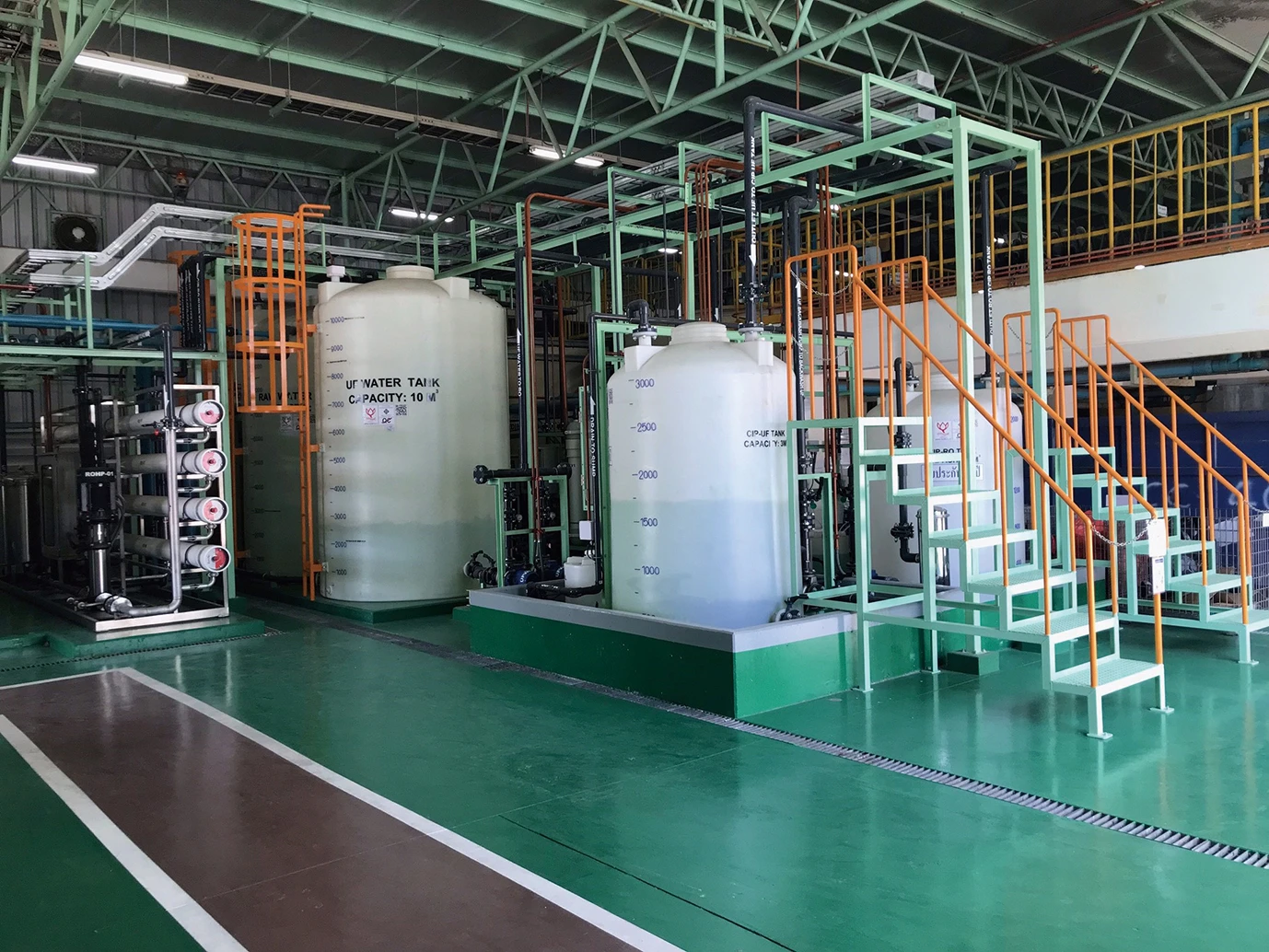
At some of our facilities, we are operating water recycling equipment to reduce water usage. Additionally, we collect and disclose environmental data from Group companies to verify the environmental impact of our activities. We are also working to confirm the results of these initiatives, as well as the challenges involved, and to pursue environmental management activities based on the targets.
Identifying Risks to Biodiversity
We recognize the possibility that our operations and products could have a significant impact on the natural environment and biodiversity during the processes of mining raw materials, manufacturing products, during the use of final products containing aluminum, and in the disposal stage. We strive to understand all of the risks to biodiversity associated with our business activities. We consider the biggest risk to be wastewater from one of our manufacturing plants impacting the habitat of aquatic organisms. We take extensive measures to minimize that potential, including 24-hour monitoring, by maintaining wastewater quality standards that are above and beyond legal requirements.
Making Packing Materials Recyclable
We pursue reuse, recycling, conversion to other materials, and other approaches for handling wood-based materials used in our products or as packing material. In the past, we used wood-based packing materials for some of the raw materials for our products. These wood-based materials, however, are not recyclable and must be disposed of as industrial waste. To improve upon this situation, we switched to cardboard packing materials, which are easily recyclable. By reducing our use of wood materials and producing less waste, we aim to help reduce the harvesting of trees, which provide habitats for various types of living organisms.
Helping to Eliminate Invasive Species
We are keenly aware that in an era of globalization, non-native species entering Japan as pets or as a result of the movement of goods and people are endangering native species by threatening their habitat and, through crossbreeding, their gene pools.
We cooperate with the invasive species extermination efforts of local governments and encourage employees to participate as volunteers.
Greening Activities
We are adding plant life to our business sites to create habitats for local flora and fauna.
Topics: Greening Activities
The UACJ Fukui Forest: Initiatives for Regional Conservation
ーCorporate Afforestation Agreement with Fukui Prefecture and Sakai Cityー
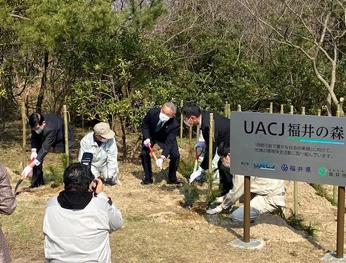
We, Fukui Prefecture, and Sakai City hosted a tree planting and signing ceremony for a new corporate afforestation agreement on March 12, 2022.
Fukui Prefecture is promoting corporate afforestation, in which companies rent land from owners free of charge and take on the responsibility of maintaining the forest. Our agreement with the prefecture will enable us to strengthen our local environmental conservation activities, interact with local communities, and raise the environmental awareness of our employees. Our agreement with Sakai City allows us to name the leased plots the UACJ Fukui Forest and to carry out forest management activities, such as planting trees and clearing underbrush, with support from the city and prefecture.
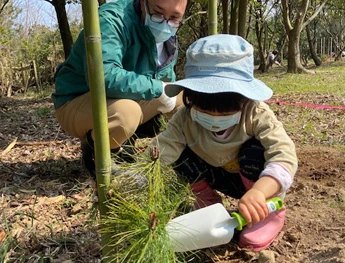
A total of about 300 red pines and black pines have been planted under the agreement, and activities continue, including underbrush clearing and tree planting. In June and July 2023, a total of 45 employees and their families helped to clear underbrush around the trees.
Mangrove Forest Restoration Activities in Vietnam
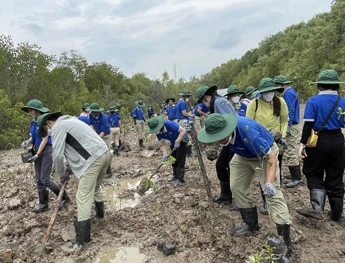
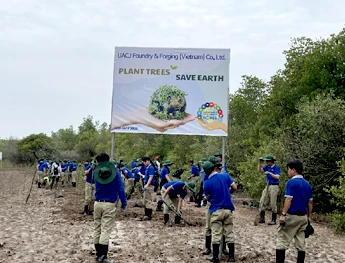
UACJ Foundry & Forging (Vietnam) Co., Ltd. (UFFV) participates in a mangrove forest restoration project. In May 2023, around 50 of its employees helped to plant approximately 500 mangrove trees in the mangrove forest at Can Gio.