

Chemical Substance Management and Pollution Prevention
 Share
Our Approach
The UACJ Group strives to properly manage chemical substances and control emissions while also switching to chemicals with low impacts on the environment and human health. We do this out of concern not only for effects on the natural environment but also for safety - for employees engaged in manufacturing our products and customers when they use our products. In our efforts to control emissions, we have established and abide by our own standards, which are stricter than those set forth in Japan’s Air Pollution Control Law, Water Pollution Control Law, local government ordinances, and conventions.
Control of PRTR Substances
The UACJ Group seeks to reduce pollutants by utilizing the Pollutant Release and Transfer Register (PRTR) system*1 based on the Act on the Assessment Releases of Specified Chemical Substances in the Environment and the Promotion of Management Improvement* to ascertain and disclose the amounts of substances handled, released, and transferred in its operations.
In fiscal 2025, driven by an increase in production volume compared to fiscal 2024, the handling volume increased by 17 tonnes (0.5%). As a result, Group-wide emissions and transfers for all targeted substances increased by 10 tonnes (4.7%) and 17 tonnes (13%), respectively.
- The PRTR system requires businesses handling chemical substances that are potentially hazardous to human health and the environment to estimate the amounts of chemical substances released from business sites into the environment (air, water, and soil) and transferred in waste, and report the data to the local governments. The governments then compile the reported data and estimates and publish the emission and transfer volumes.
Amounts of PRTR Substances Handled
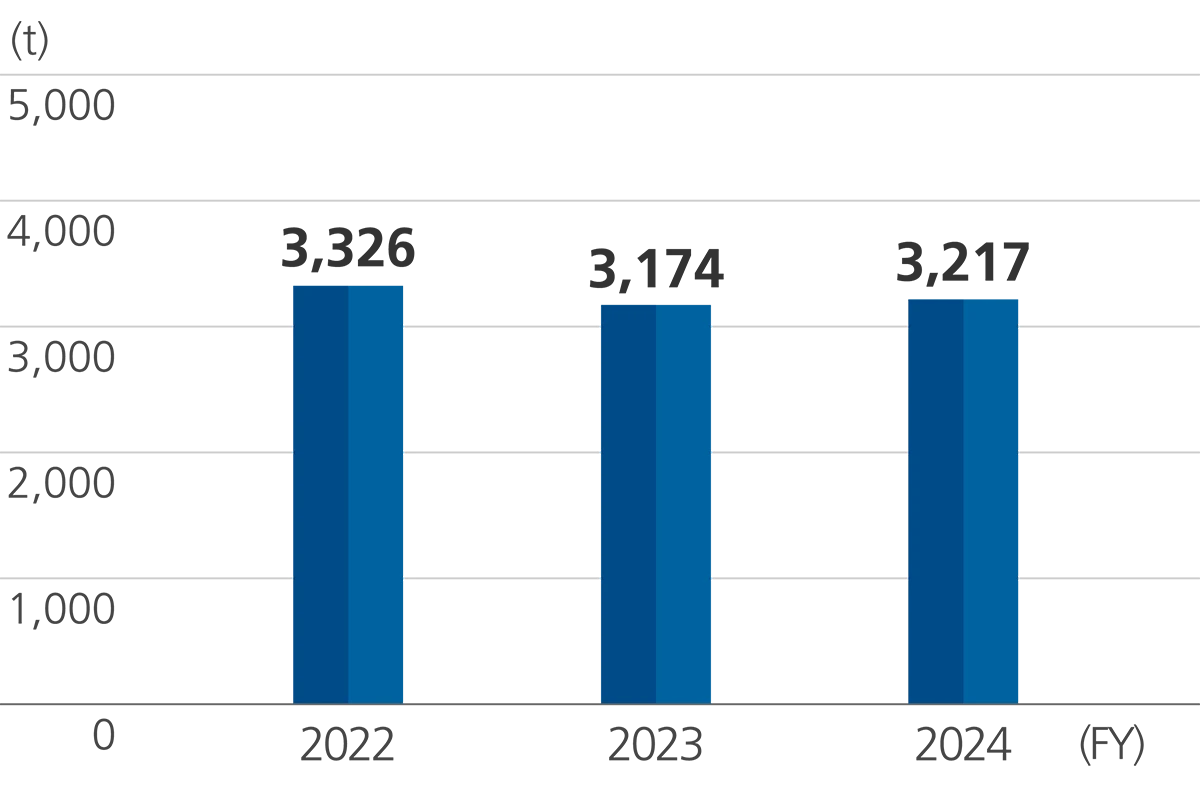
- (Contain manganese, chromium, nickel, and lead as alloy substances)
Amounts of PRTR Substances Released or Transferred
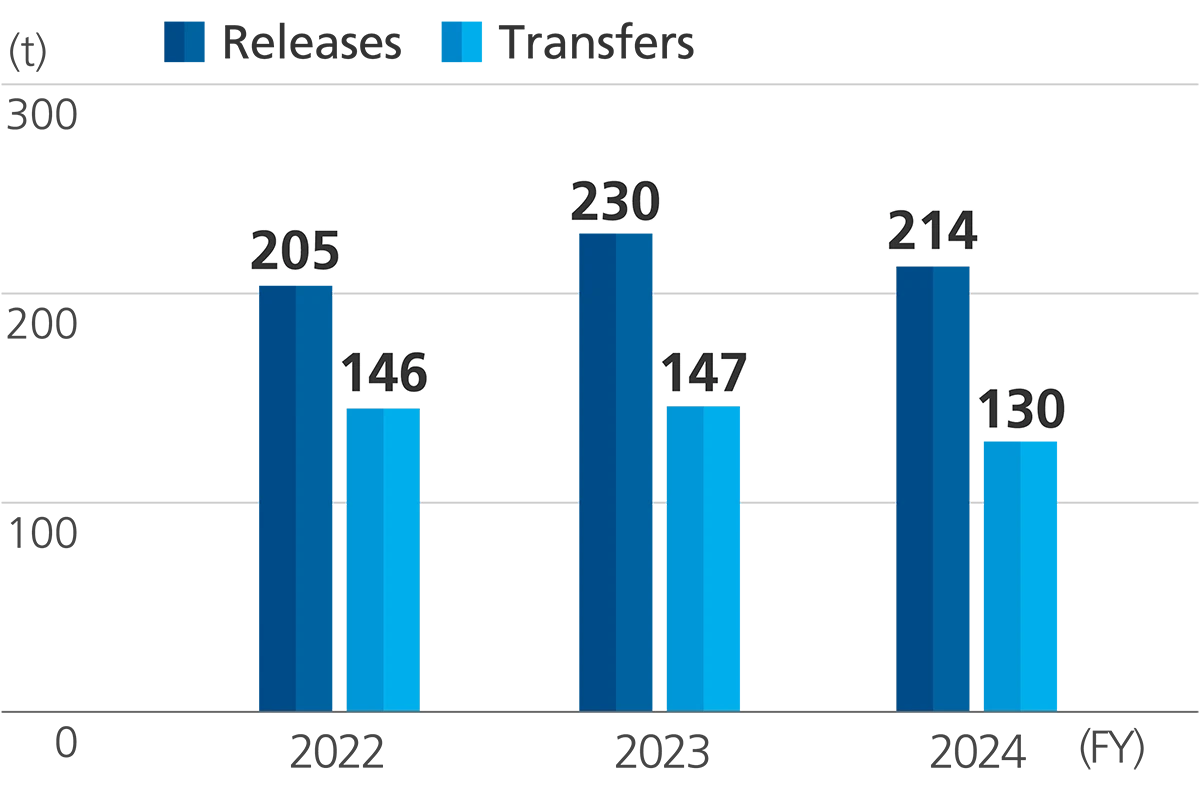
- Measurement scope: UACJ (Nagoya, Fukui, Fukaya, Nagoya(Extrusion), Oyama, Foundry & Forging) , UACJ Aluminum Center Corporation (Utsunomiya Color Aluminum), UACJ Extrusion Anjo Corporation, UACJ Extrusion Gunma Corporation, UACJ Extrusion Shiga Corporation, UACJ Foil Corporation (Isesaki ,Shiga, Nogi)
- Companies and sites as of September 30, 2025.
Reducing VOC Releases
The UACJ Group has designated toluene, xylene, ethylbenzene, and trimethylbenzene as substances to be reduced and is taking steps to reduce atmospheric emissions of volatile organic compounds (VOCs).
We work to ensure the proper operation and maintenance of exhaust gas treatment equipment at each business site, while continuously maintaining atmospheric emissions at low levels. Furthermore, we continue to promote initiatives to reduce emissions, such as transitioning to eco-friendly (low-environmental-impact) alternatives for thinners.
Prevention of Air Pollution
The UACJ Group is seeking to reduce emissions of air pollutants by maintaining and managing plant facilities and by converting fuel sources from heavy oil to LNG. Efforts to date are enabling the Group to maintain low levels of SOx and NOx emissions.
NOx Emissions
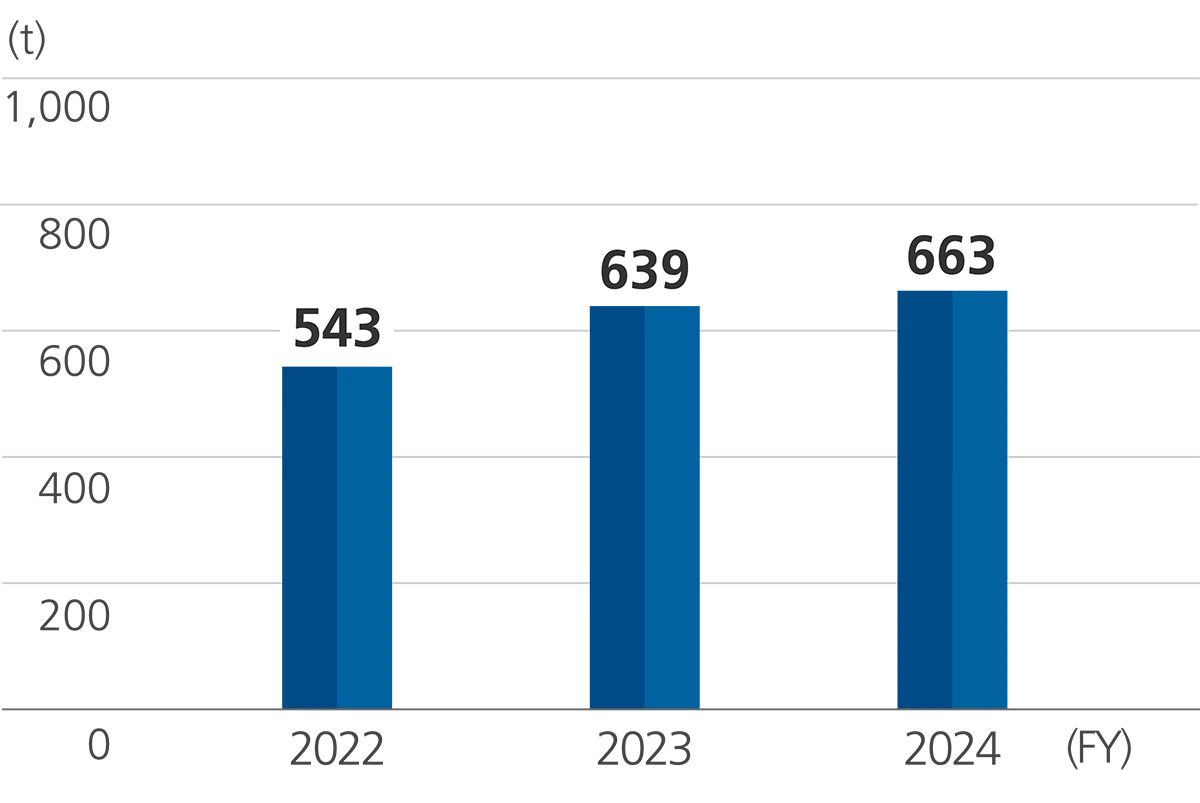
SOx Emissions
- Measurement Scope: UACJ (Nagoya, Fukui, Fukaya, Oyama)
- Companies and sites as of September 30, 2025.
Control of PCBs
In accordance with Japan's Act on Special Measures concerning Promotion of Proper Treatment of PCB Wastes (PCB Special Measures Law) (PCB: polychlorinated biphenyls), the UACJ Group conducts surveys at each business site, develops replacement plans, and advances the replacement and removal of targeted electrical items. Removed items are properly stored, managed, and disposed of.
We are continuing the systematic disposal of currently identified high- and low-concentration PCB waste. Furthermore, should any new PCB-containing equipment or items be discovered in the future, we will strive for prompt notification and proper disposal within fiscal 2026, while also establishing a management system capable of responding appropriately to future legislative amendments.
Addressing the Problem of Asbestos
The UACJ Group records the history of asbestos use, examines the current status, and implements measures to reduce asbestos in its products, factory buildings, equipment, and fixtures. The Group has never used asbestos in its product or sold products that contain asbestos.
Regarding the buildings, sprayed asbestos, used in a small portion of buildings and posing a high scattering risk, was fully removed in fiscal 2024.
When regularly scheduled inspections are conducted, we are replacing equipment and fixtures with low asbestos risk with equipment and fixtures that do not contain asbestos.
Measures to Control Dioxins
The UACJ Group’s aluminum melting furnaces are categorized as “specified dioxin-emitting facilities” under the Act on Special Measures against Dioxins, and we strive to maintain the concentration of dioxins in exhaust gas below the regulatory levels.
We do this by maintaining the optimum amount of combustion air in the aluminum melting furnace and thoroughly controlling the input materials, thereby preventing the production of dioxins.
As required by law, we also inspect our aluminum melting furnaces for dioxins each year and report the results to the government. The dioxin inspections in fiscal 2025 found levels below the legal requirements at all of our 26 designated air quality facilities and 2 designated water quality facilities.
Prevention of Water Pollution
The UACJ Group strictly complies with relevant laws and regulations, including the Water Pollution Prevention Act, and maintains and manages appropriate structural standards for hazardous substance storage facilities and piping to prevent leaks. By continuously conducting routine inspections and planned equipment maintenance, we proactively prevent the discharge of hazardous substances into public water bodies and work to reduce the risk of water pollution. Furthermore, we have established a rapid response system to minimize damage even in the unlikely event of equipment failure.
Prevention of Soil and Groundwater Contamination
UACJ (Oyama works) and UACJ Aluminum Center Corporation (Utsunomiya) used specified hazardous substances in the past and are continuing with cleaning operations for contaminated groundwater. The companies’ monitoring of the effectiveness of their efforts are showing that the contamination levels are decreasing.